




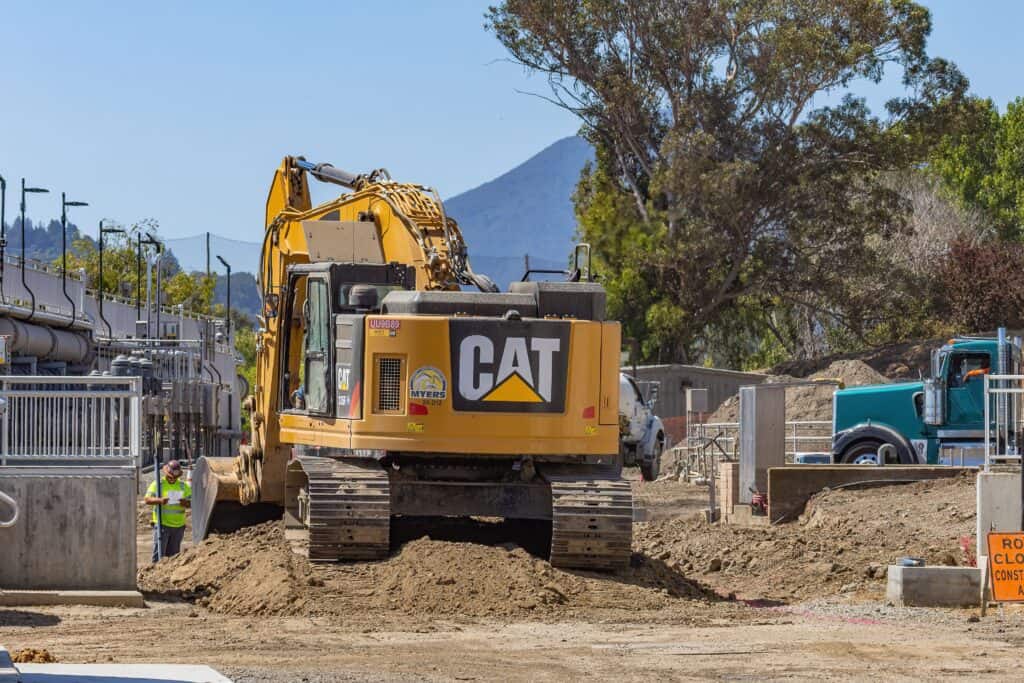
Soil investigation, ...is a geotechnical investigation conducted to determine a plot of land’s bearing capacity, the groundwater level, and the structure of the soil layers. Conducting this study before beginning construction of a villa is both a legal requirement and an essential step for the safety of the structure. Since soil conditions can vary from lot to lot in coastal areas such as Çeşme and Alaçatı, the results of this study form the foundation for the design phase.
What Is a Soil Study, and Why Is It Required?
Soil investigations, drilling studies, and laboratory tests determine the soil’s bearing capacity, settlement potential, and seismic behavior. Under the Planned Areas Zoning Regulation, a soil and foundation study report is prepared separately for each parcel to enable the foundation and structural calculations for the building and is one of the attachments to the building permit application. The content of the report is regulated in accordance with the procedures and principles established by the Ministry of Environment, Urbanization, and Climate Change and within the framework of the Turkish Building Seismic Code; it must be prepared jointly by geologists, geophysicists, and civil engineers and signed separately by each. A structural design cannot be prepared without this report, and a building permit cannot be obtained without a structural design.
What Happens If a Site Survey Isn't Conducted?
A foundation design prepared without knowing the bearing capacity of the soil can be flawed in two ways: it may be over-reinforced—resulting in unnecessary costs—or it may be insufficient. An inadequate foundation carries the risk of settlement, cracking, and—in the worst-case scenario—structural damage over the years. The vast majority of these risks are prevented not after construction begins, but before the first concrete is poured into the foundation.
Foundation Types Based on the Results of a Soil Investigation
Different foundation systems are selected based on the bearing capacity and soil layers identified in the feasibility study:
- Singular base: An economical type of foundation applied beneath columns on solid ground with high bearing capacity.
- Continuous (perpetual) basis: A system used on floors with medium load-bearing capacity, in which wall and column loads are distributed in strips.
- Mat foundation: A foundation that covers the entire base of a structure and distributes the load over a wide area on soils with low bearing capacity.
- Pile foundation: A system consisting of reinforced concrete or steel piles that transfers the load to a stable layer deeper in the ground when the surface soil is insufficient.
Factors Affecting the Cost of a Site Investigation
The cost of a geotechnical investigation varies depending on the lot size, the number and depth of boreholes, the geological structure of the soil, and the scope of laboratory testing. Plots located near the shoreline may require additional testing due to high groundwater levels, which can increase the cost somewhat. Although the cost of the study is a small item within the total construction cost, it is far lower than the future repair costs that could result from an incorrect foundation selection.
High groundwater levels in lots near the coastline directly affect both the type of foundation and the waterproofing strategy. Since the soil structure in Çeşme and Alaçatı can vary significantly from one area to another, it cannot be assumed that the foundation solution used on a neighboring lot will be suitable for your lot. Our approach to waterproofing Waterproofing in Buildings As we discussed in our article, decisions regarding soil investigation and waterproofing directly influence one another.
As Imerek Construction Alaçatı In our villa projects in Çeşme, we perform structural design based on the results of the geotechnical survey, and we determine the foundation system and wall insulation based on this data. Project Services On our website, you can learn about our architectural and structural design process, Rough Construction You can also review our application process on our website.
Frequently Asked Questions
When should a soil survey be conducted?
It is ideal to conduct this study immediately after purchasing the lot, before the architectural and structural design is prepared. Since the results of the study indicate what type of building can be constructed on the lot and with which foundation system, it should inform the design decisions.
Can construction begin without a soil study?
No. A structural design is required for a building permit application, and a geotechnical investigation report is required for the structural design.
How long does a soil survey take to complete?
Depending on the plot size and the number of boreholes, fieldwork takes a few days; including the laboratory and reporting phases, the entire process is typically completed within two to three weeks.
Who determines the base type?
Based on the data in the geotechnical investigation report, the structural engineer determines the foundation system appropriate for the structure’s load and the soil’s bearing capacity.

