




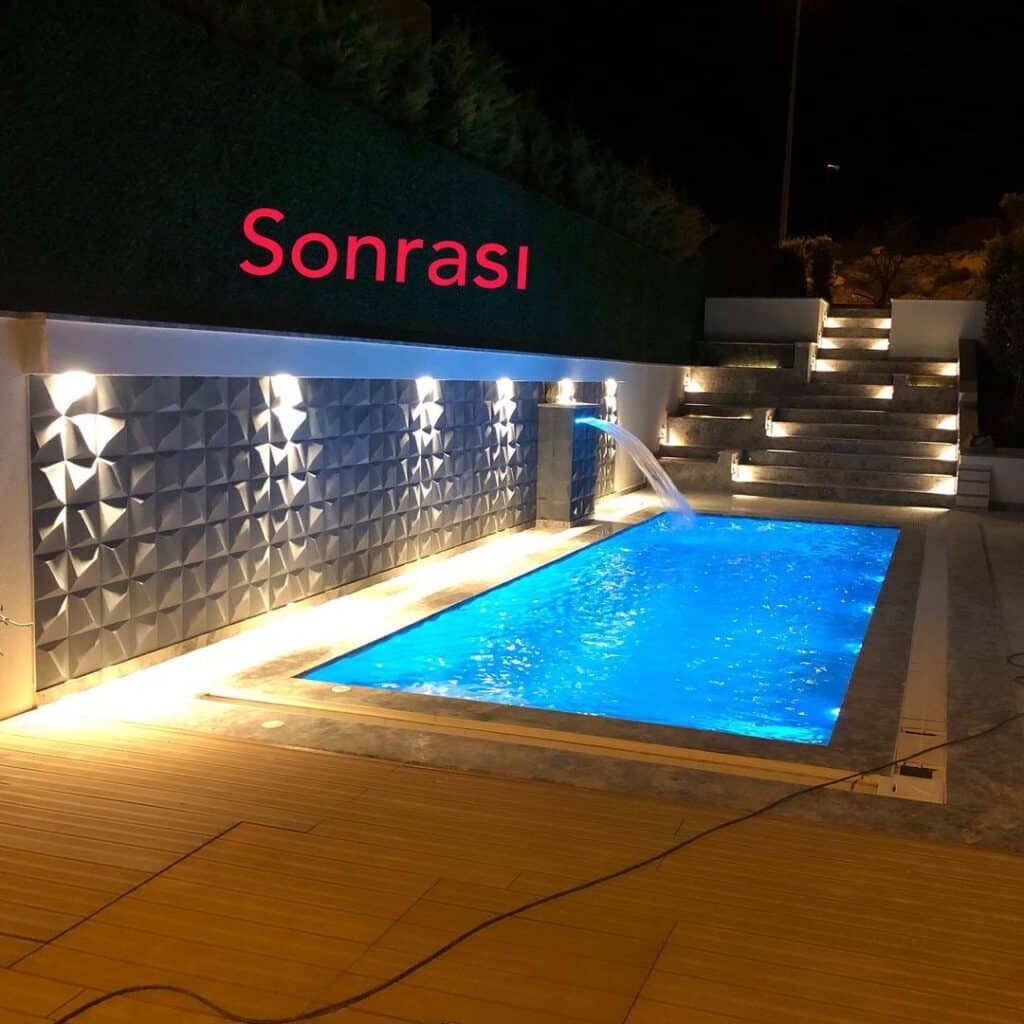
The two most commonly used methods for water disinfection in villa pools chlorine system and ozone system. In the villa projects we have completed as İmerek Yapı, particularly Akdemir Villa We prefer ozone systems in projects like these; the reason is not just comfort, but also long-term ease of maintenance.
How Does an Ozone System Work?
An ozone generator converts oxygen in the air into ozone and injects it into the water. Ozone is a powerful oxidizing agent; it neutralizes bacteria and microorganisms much more quickly than chlorine, and then reverts to oxygen, leaving no permanent chemical residue in the water.
Why Isn't Ozone Enough on Its Own?
Ozone’s greatest advantage is also its greatest limitation: it does not remain in the water. Ozone does its job at the point of contact in the machinery room and quickly reverts to oxygen. This means that no protective substance remains in the water as it returns to the pool basin.
However, contaminants are constantly entering the pool—from swimmers, the wind, and leaves. To combat this contamination, a protective agent must be present in the water at all times. This is the only way in which chlorine is superior to ozone: it remains in the water. For this reason, chlorine is not completely removed from ozone-treated pools; ozone handles the main oxidation load, while a low dose of chlorine provides continuous protection within the pool. The two are not competitors but rather systems that work together.
A Common Misconception: “The Smell of Chlorine”
Contrary to popular belief, the pungent odor that is so unpleasant in swimming pools does not come from chlorine itself. The odor stems from chloramines, which are formed when chlorine reacts with nitrogen-containing organic contaminants in the water (such as sweat, cosmetics, and skin residue). These compounds are also largely responsible for eye burning and skin irritation.
This distinction is important in practice: in a pool with a strong chlorine odor, the problem is usually not “excess chlorine” but a buildup of chloramines—in other words, the water is actually under-treated. The reason an ozone system reduces odor and irritation is not because it is hostile to chlorine, but because it breaks down these compounds by oxidizing them.
Advantages of the Ozone System
A significant reduction in odor and irritation, water that feels softer, and lower chlorine consumption are the key advantages of the ozone system. It is a system particularly favored by families with children and users with sensitive skin.
There is also one aspect of the system that requires special attention: ozone is a hazardous gas when inhaled. For this reason, the generator must be properly sized, excess ozone mixed into the water must be removed before it returns to the pool, and the machine room must have adequate ventilation. These details also explain why planning the system during the manufacturing phase is safer than adding components later.
For Which Pools Is It Suitable?
The ozone system is typically used in conjunction with low-dose chlorine (the chlorine is not completely eliminated, but its concentration is reduced). The system is an integral part of the engine room design pool manufacturing It should be planned during this phase; although it can be added later, the most efficient results are achieved when it is integrated during the design phase.
Your Pool Project with Imerek Yapı
For your pool project, we plan the equipment for the mechanical room—including the ozone system—based on your needs. For details, Pool Manufacturing You can browse our website and contact the İmerek Yapı team at: +90 545 732 64 44 / [email protected]

