




Energy efficiency is a factor that determines a villa’s annual heating and cooling costs but is often not discussed sufficiently during the design phase. However, this is not a feature added after construction is complete; rather, it is a system formed by the combination of thermal insulation decisions made during the rough-in phase and the selection of window and door frames. At İmerem Yapı, we approach energy efficiency in our villa projects as a series of interconnected decisions—from exterior wall insulation to window and door profiles. In this article, we explore why these decisions must be considered together.
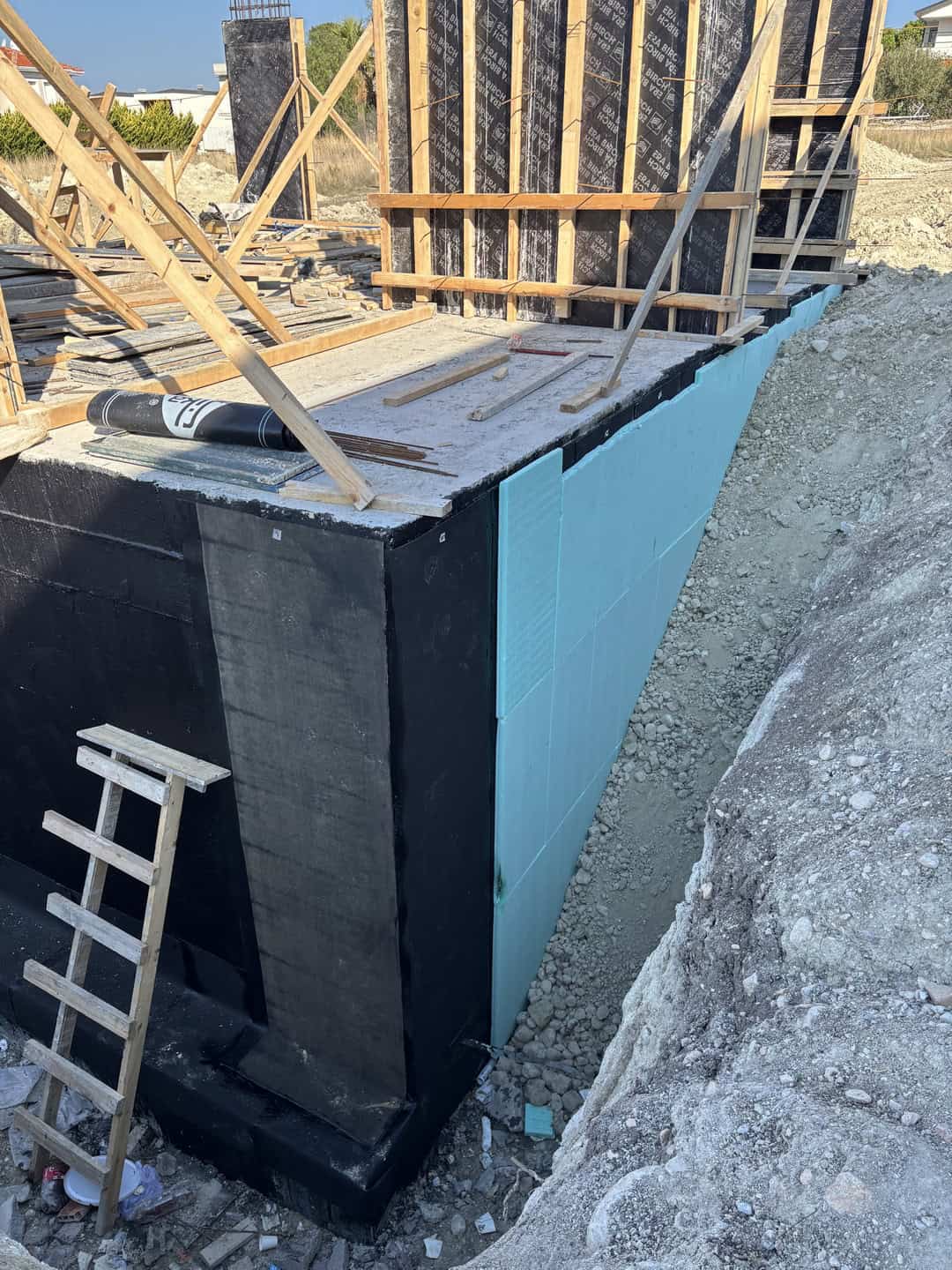
Materials and Application Thickness in Thermal Insulation
The most common mistake in exterior wall insulation is determining the thickness of the insulation board based on a general average rather than the specific climate zone. In the mild but humid coastal climate of Çeşme and Alaçatı, it is just as important to ensure that the bonding and jointing details between the insulation board and the wall are seamless as it is to determine the thickness of the insulation board; because even the smallest gap that creates a thermal bridge will, over time, lead to condensation and energy loss at that point. For this reason, we install thermal insulation not as a system relying solely on the quality of a single material, but as a system where the panel, adhesive, and plaster layers work together.
Thermal Break Profile for Aluminum Framing
In aluminum window and door systems commonly used in villa projects, the key factor determining energy efficiency is the thermal break strip installed between the inner and outer surfaces of the profile. Without this strip, the aluminum profile acts as a conductor, directly transferring the outside temperature to the inner surface, leading to condensation in the winter and heat gain inside the space in the summer. When selecting window and door systems, we prioritize this technical detail over the profile’s aesthetics; because a villa’s expansive glass facades can become the weakest link in energy efficiency if the profile is not properly engineered.
Glass Selection: Low-E Coating and Number of Layers
No matter how good the window frame is, the thermal transmittance of the glass also directly affects the outcome. In double- or triple-pane units, the gas fill and low-E coating allow you to take advantage of natural light without letting in more heat from the sun than necessary. In villa projects where large windows with ocean views are preferred, this choice is a key detail that significantly reduces the cooling load in the summer; for this reason, we evaluate the glass specifications separately based on the project’s facade orientation.
Imerek Yapı’s Approach to Energy Efficiency
Since we carry out the rough construction without subcontractors—using our own team and our own formwork system—thermal insulation, facade details, and coordination of window and door installations are all managed on-site by the same team; this prevents gaps from arising between different construction elements. Our zero-tolerance approach to materials and construction chemicals is also based on the principle of “not the cheapest, but the right choice” when it comes to energy efficiency.
If you’d like to plan the thermal insulation and window and door selections for your villa project together, you can contact the İmerek Yapı team by calling +90 545 732 64 44 or emailing [email protected].

