




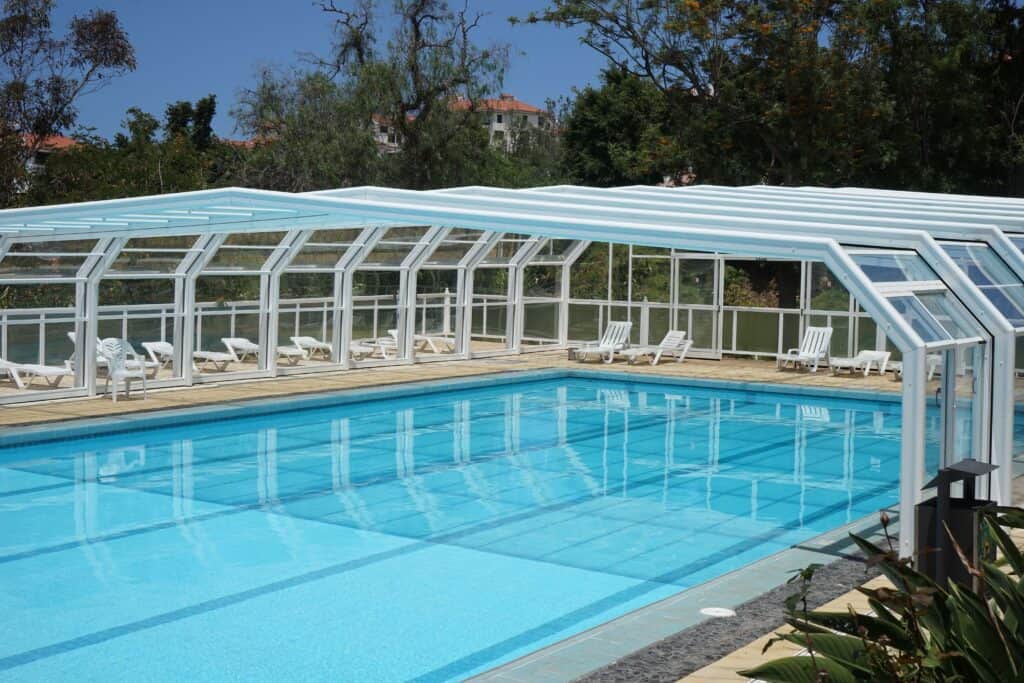
In Çeşme and Alaçatı, most villa pools sit unused from fall through spring. The majority of the problems encountered at the start of the season stem from something that happens to the pool during the winter the fact that it is No, it’s caused by skipping a step during the shutdown process. Below, we’ve listed the shutdown and startup processes in the order we performed them.
If you're wondering why pool chemistry works this way, the mechanism is Pool Villa Maintenance We explained this in detail in our article. This article, however, is a list of the tasks to be done.
End of Season: Things to Do in Order
- Clean the pool. Remove the leaves from the surface, vacuum the bottom, and scrub away the band of dirt along the walls and waterline. A pool that goes into winter dirty is much harder to clean in the spring.
- Adjust the water level. Don’t change the order: total alkalinity first, then pH, and finally the disinfectant. A shock treatment and algaecide applied before closing down significantly reduce spring algal blooms.
- Lower the water level—but don't drain the pool. The water level is lowered until it reaches below the skimmer inlet. Draining the pool completely is not recommended: the water inside helps keep the shell balanced against pressure from the ground. In coastal areas where the groundwater level is high, an empty pool can put undue stress on the shell.
- Completely drain the plumbing system. This is where the real risk of freezing lies. Drain the water from the pump, filter, heater, and pipes; remove the plugs; and leave the valves open. When the water remaining in the pipes freezes, it expands and causes them to crack.
- Get your equipment ready for winter. Clean the filter cartridge and store it in a dry place. If there is a salt generator, remove the cell, descale it, and store it indoors. Check the heater and pump connections.
- Spread out the sheet and secure it. Along the shoreline, the wind makes the cover the most critical component; a loose cover is not only ineffective but can also be blown away and damage the pool lining.
Throughout the Winter: Monthly Maintenance Tasks
- Remove any rainwater and leaves that have accumulated on the cover; their weight puts strain on the cover and its fastenings.
- Check that the cover is secure after a storm.
- Make sure the water level does not drop too low or rise too high due to rainfall.
- Don’t just leave the water to its own devices; checking the disinfectant balance a few times throughout the winter will make opening the pool much easier.
Season Kickoff: What to Do Step by Step
- Remove the cover by cleaning it. Remove any water and dirt from it without letting it drip into the pool; after drying it, fold it up and store it.
- Examine the shell and the seams. Check for cracks, blistering, discoloration, or crumbling in the joints. This inspection also serves as an indicator of the quality of the waterproofing applied during construction—if any issues are found, they should be addressed before filling the structure with water.
- Put the system into operation. Install the plugs, close the valves, and check for leaks at the joints while filling the system.
- Install the equipment in its proper place. Complete the connections for the filter cartridge, salt generator cell, and heater.
- Top off the water level and restore balance. Once again, in the same order: alkalinity, pH, disinfectant.
- Keep the circulation running continuously. Do not stop filtration until the water becomes clear; rushing this step could lead to a cloudiness problem that lasts all season.
The Three Most Common Mistakes
- Completely drain the pool. “It’s done with the thought, ”I won’t be using it anyway,” and is the riskiest decision in terms of the shell.
- Focusing only on the pool and forgetting about the plumbing. In winter, the real damage occurs not in the pool but in the machine room.
- Turn off the water while it's dirty. A pool that has become clogged with organic debris requires much more chemicals and labor in the spring.
If you would like to request winter maintenance recommendations for your pool project or an inspection of the machinery room, please contact the İmerek Yapı team: +90 545 732 64 44 / [email protected]
Frequently Asked Questions
Should the pool be completely drained in the winter?
No. The water in the pool basin keeps the shell balanced against the pressure from the ground; an empty pool poses a risk, especially on coastal lots where the groundwater level is high. The water level is lowered below the skimmer inlet, but the pool retains its volume. It is the plumbing system that needs to be drained.
What is the most critical step in winter maintenance?
Completely draining the system. When water remaining in the pump, filter, heater, and pipes freezes, it expands and causes cracks; most winter damage occurs in the machine room.
Is a pool cover necessary?
Yes. It prevents the buildup of leaves and dirt and reduces water loss. It is also important to secure the cover firmly along the edge; a loose cover can damage the pool lining.
What checks should be performed at the start of the season?
Before filling with water, the shell and joints should be inspected for cracks or spalling; then, when the system is put into service, a leak test should be conducted, equipment should be installed, and the water’s alkalinity, pH, and disinfectant levels should be balanced in that order.

