




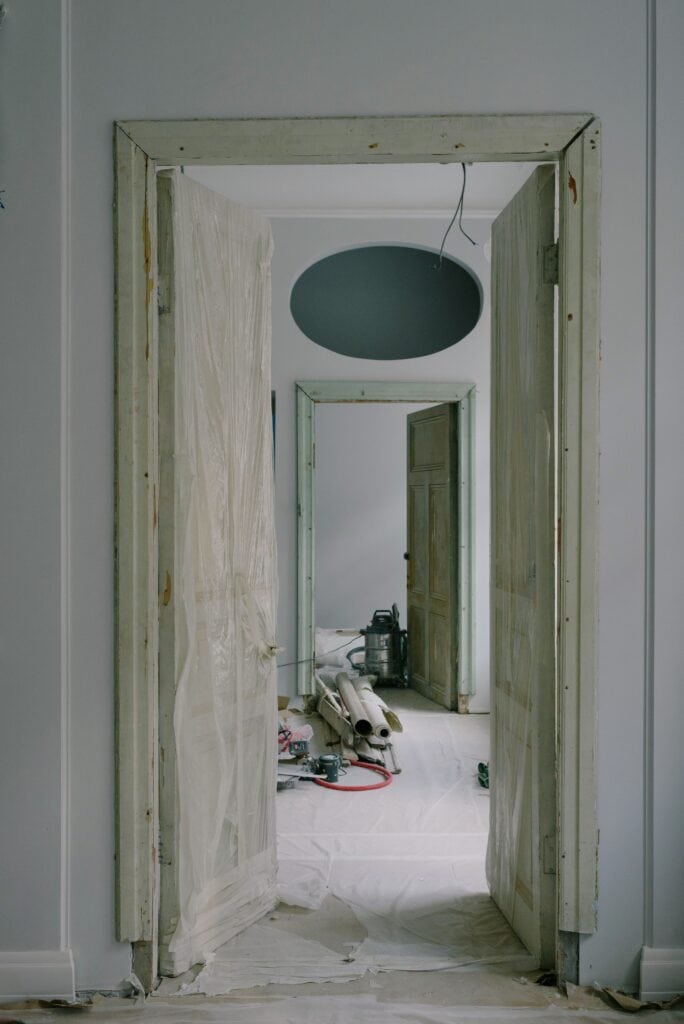
Villa Renovation, It’s a project that can quickly exceed the budget and schedule if started without a plan, but becomes a predictable process when approached in the right order. The most common question asked by homeowners—whether they’re looking to renovate summer villas in Çeşme and Alaçatı that have been in use for years or make changes to a newly purchased villa—is: “Where should we start?” At İmerek Yapı, while the answer to this question may vary depending on the scope of the project, the order we follow is always the same: start with what’s hidden, then move on to what’s visible.
Step 1: Discovery and Prioritization
Every renovation begins with an on-site inspection of the villa. At this stage, we seek answers not only to the question “What will change?” but also to “In what order will the changes be made?” If there is an issue with elements that are difficult to address later—such as electrical wiring, plumbing, or the roof—these are addressed before visible work like flooring or painting. Otherwise, newly installed flooring may have to be torn up again to access the wiring or plumbing.
Step 2: Wet Areas and Plumbing
Wet areas such as the bathroom, kitchen, and, if present, the Turkish bath are the most critical parts of the renovation. The condition of the old plumbing, the risk of hidden leaks, and the lifespan of the insulation are assessed at this stage. If the villa is used heavily during the summer months, skipping this inspection could lead to a much more costly intervention in the years to come.
Step 3: Electricity and Lighting
Upgrading the electrical wiring or adding more outlets and light fixtures is a task that must be completed before any wall or ceiling work begins. For villa owners who want to install a smart home system, this is also the right stage to plan the wiring.
Step 4: Surface Finishing
Once the plumbing and electrical work is complete, it’s time to move on to plastering, rendering, painting, flooring, and ceiling work. This stage is the visible face of the villa and is usually the part that takes the most time; however, if the previous steps have been completed in the correct order, the finishing work won’t present any surprises.
Step 5: Exterior Facade and Final Checks
Once the interior of the building is complete, exterior elements such as the roof, exterior insulation, exterior paint, and balconies—if included in the scope—are addressed. A final inspection is conducted prior to handover to ensure that all systems are in working order and that all finishing work has been fully completed.
Our Approach to the Renovation Process at İmerek Yapı
Renovations are not as “irreversible” a stage as rough construction, but if they are carried out in the wrong order, they result in unnecessary costs from tearing down and rebuilding. At İmerek Yapı, Our renovation services We carry out all interior and exterior work with a single team, in the order listed above. For examples of our villa renovation projects, Akdemir Villa and Aksu Villa You can take a look at our projects.
If you would like to request an estimate for the renovation of your villa, please contact the İmerek Yapı team: +90 545 732 64 44 / [email protected]
Frequently Asked Questions
At what stage should you start renovating a villa?
First, items that are difficult to modify later—such as electrical and plumbing systems—should be addressed, followed by wet areas, then surface finishes, and finally the exterior facade.
How long does a villa renovation take?
Depending on the scope of the work, small room-by-room renovations can take a few weeks, while extensive renovations throughout the entire villa can take several months.
Do you also make changes to the exterior of the villa during renovations?
Yes. Exterior building components such as the roof, exterior insulation, exterior walls, and balconies are also included in our renovation scope.
Does the electrical wiring need to be replaced during the renovation?
In older villas, this may be necessary depending on the age and capacity of the electrical system; if a smart home system is to be installed, the wiring must be planned during the early stages of the renovation.

