




The hamam is one of the most private wet areas in a villa; however, it is also one of the areas most at risk of wear and tear due to constant exposure to moisture, steam, and water. Even a hamam built with the right materials and craftsmanship can, over time and without regular maintenance, experience cracking in the grout, a loss of luster on surfaces, and a decline in the efficiency of its plumbing system. At İmerem Yapı, we don’t just build the hamam correctly in our villa projects—we also guide homeowners on how to maintain it properly over the long term. In this article, we’ll discuss the basic maintenance habits that extend the life of a villa hamam.
Good Habits for Daily and Weekly Cleaning
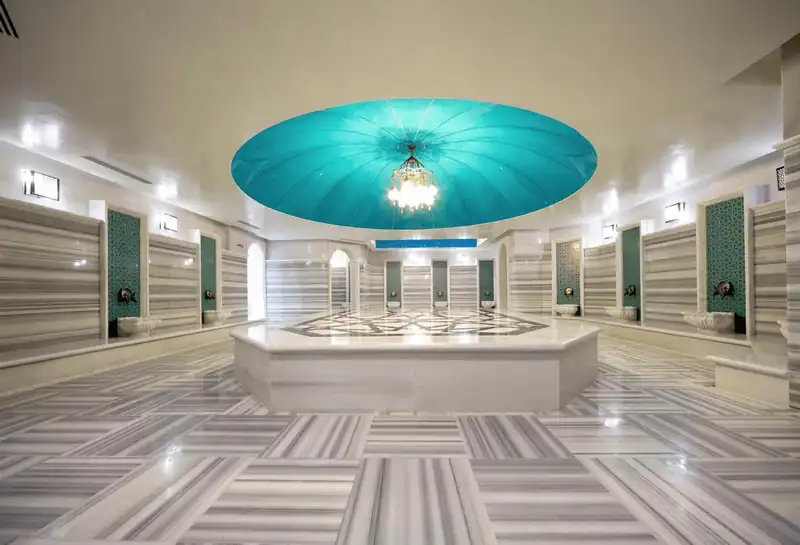
Because the marble and natural stone surfaces used in Turkish baths have a porous structure, using the wrong cleaning products can cause permanent damage. Instead of detergents containing acids or abrasives, pH-neutral cleaning products suitable for stone surfaces should be used; otherwise, the surface may become dull and develop pitting over time. Thoroughly ventilating the hamam after each use and preventing moisture from accumulating in the space both prevents mold growth and extends the life of the grout. Wiping down the basin and seating surfaces with a dry cloth after use is also a simple yet effective habit.
Periodic Inspections of Joints and Insulation
One of the most critical maintenance areas in a Turkish bath is the grout. Grout that is constantly exposed to cycles of heat and humidity can develop microcracks over time; moisture can reach the insulation layer beneath the grout before these cracks become visible to the naked eye. For this reason, we recommend visually inspecting the grout at least once a year and promptly replacing any sections showing discoloration or separation. Even if there is no visible leak in the plumbing, any moisture stains at the base of walls or a faint musty odor should not be ignored; because a problem detected early in the Turkish bath can be resolved at a much lower cost than one detected later.
Maintenance of the Heating System and Ventilation
A Turkish bath’s heating system—whether electric, water-based, or connected to a boiler—is mechanical equipment that requires regular maintenance. Especially in areas with high water hardness, limescale can build up in the heating lines over time; this both reduces efficiency and shortens the system’s lifespan. Having the heating and steam system inspected once a year by a qualified team is the most practical way to prevent potential malfunctions before they become serious. Ventilation ducts must also be cleaned regularly; a clogged ventilation system leads to moisture buildup in the space and, consequently, accelerates the development of surface and joint problems.
Our Approach to Turkish Bath Construction and Maintenance at İmerek Yapı
At İmerek Yapı, we have been operating with a zero-tolerance approach toward the materials and construction chemicals we use in wet areas—such as Turkish baths—in the villa projects we have completed in Çeşme and Alaçatı since 2017. Since the hamam’s lifespan is determined not only by its construction but also by its subsequent use, we provide our clients with guidance on maintenance for the villas we deliver. For detailed information about our hamam construction services, Bath Manufacturing You can visit our page.
If you would like more information about the maintenance of your villa’s Turkish bath or the construction of a new one, please contact the İmerek Yapı team: +90 545 732 64 44 / [email protected]

